
Over the years I have worked with a lot of resellers. It is pretty obvious that the key to having a successful reseller business in cybersecurity is to be able to pick the winners early. Many of today’s biggest resellers/distributors started out selling Check Point firewalls. The ones that sold Crowdstrike early are doing quite well.
So, the most common use case among resellers for the IT-Harvest is “find the next Crowdstrike.” Since we strive to curate data on all cybersecurity vendors (4,011 today), ours is the best platform for identifying the rising starts early. The Cyber 150, published every year in the Security Yearbook, is a quick and dirty way to track the up and comers. It is comprised of cybersecurity vendors with between 50 and 500 employees sorted by growth rate.
But there are other measures.
Is at least one of the founders a successful entrepreneur with multiple exits?
Is the company backed by venture capital with a track record of backing unicorns?
Resellers, unlike VCs, are not looking to invest their efforts in a quick flip. They want to build a partnership that generates long-term returns. Like a Check Point, or Crowdstrike, it must grow and IPO, and stay independent.
Researching the space for rising stars was always a primary use case for the Dashboard. But this past week I discovered another.
Using Stack Analysis for Reseller Portfolios
A mature reseller likes to have a complete portfolio. That could mean coverage of all the Categories with expansion into subcategories. At least 18 vendors then, one for each of the 18 Categories.
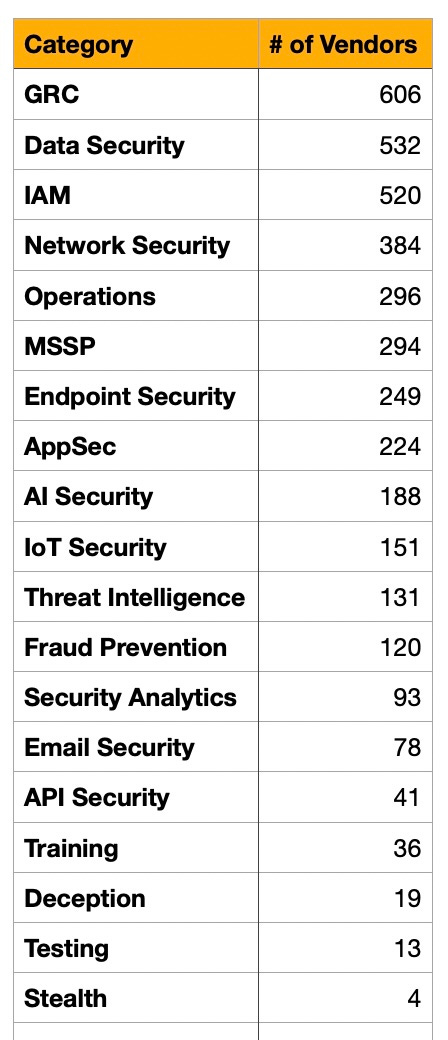
There are many subcategories under these for which specialized vendors are needed. Under Data Security for instance there are vendors of encryption, key management, HSMs, and erasure.
I recognize that most resellers evolve and grow with customer demand. They add tools to their portfolio over time as certain threats rise in importance or a new regulation arises.
So the new use case, similar to Security Stack Analysis, introduced last week, is to analyze a reseller’s portfolio for overlaps and gaps in coverage.
I created a representative reseller portfolio by adding all the products from 18 vendor partners to a Stack.
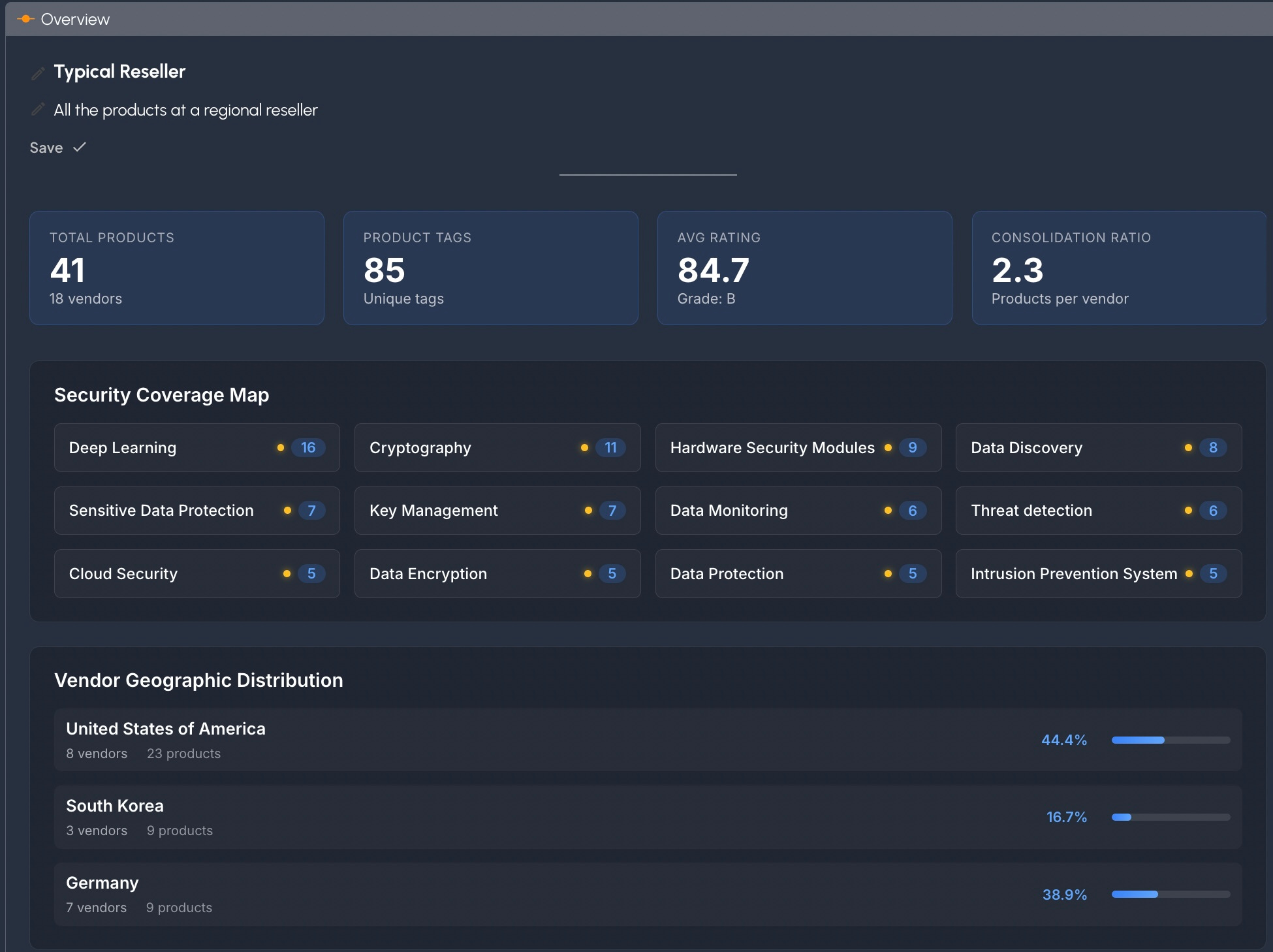
Our tool automatically maps the 41 products to subcategories and shows the mix of countries they come from.
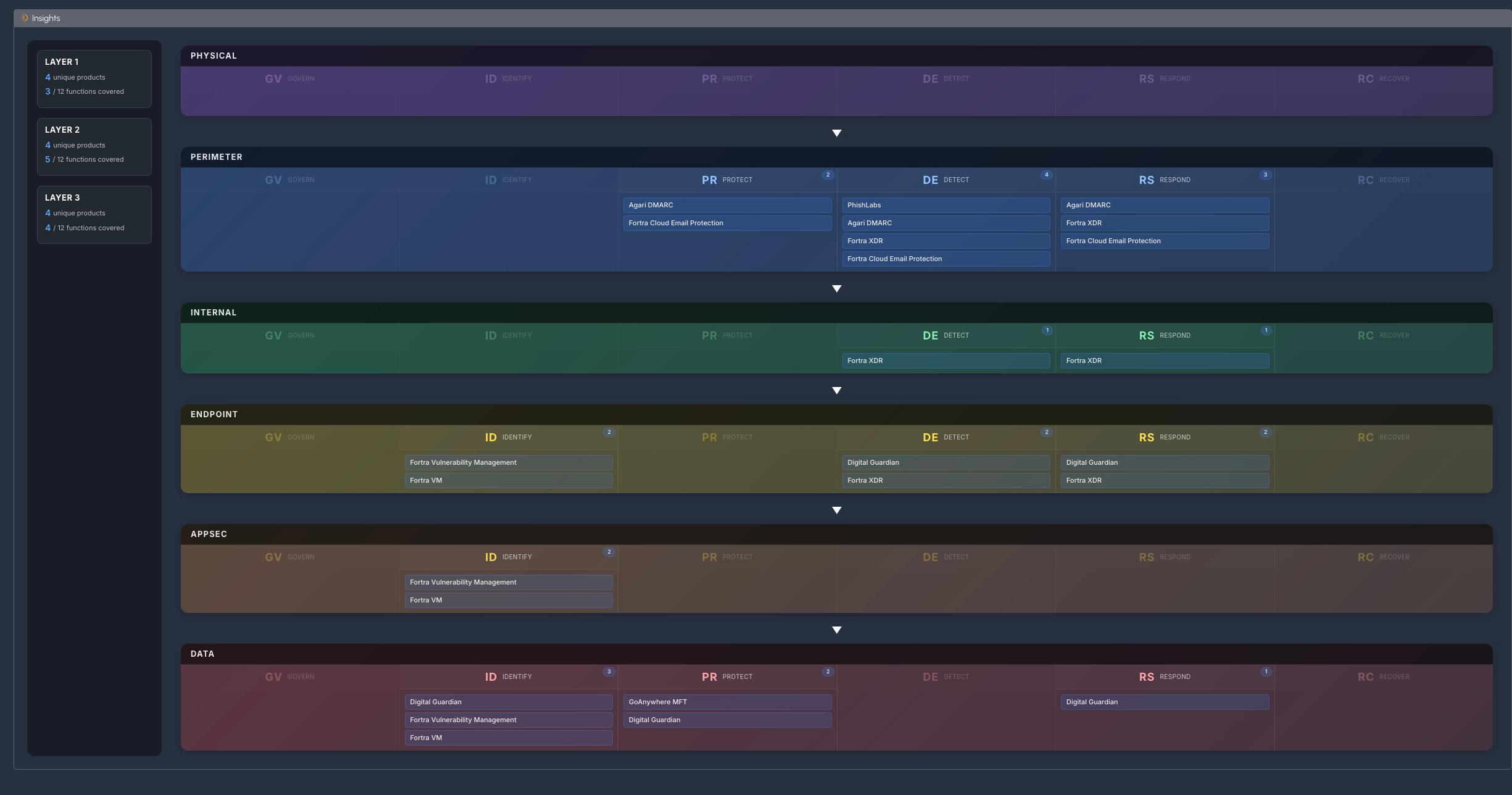
Another useful view is our layered defense framework.
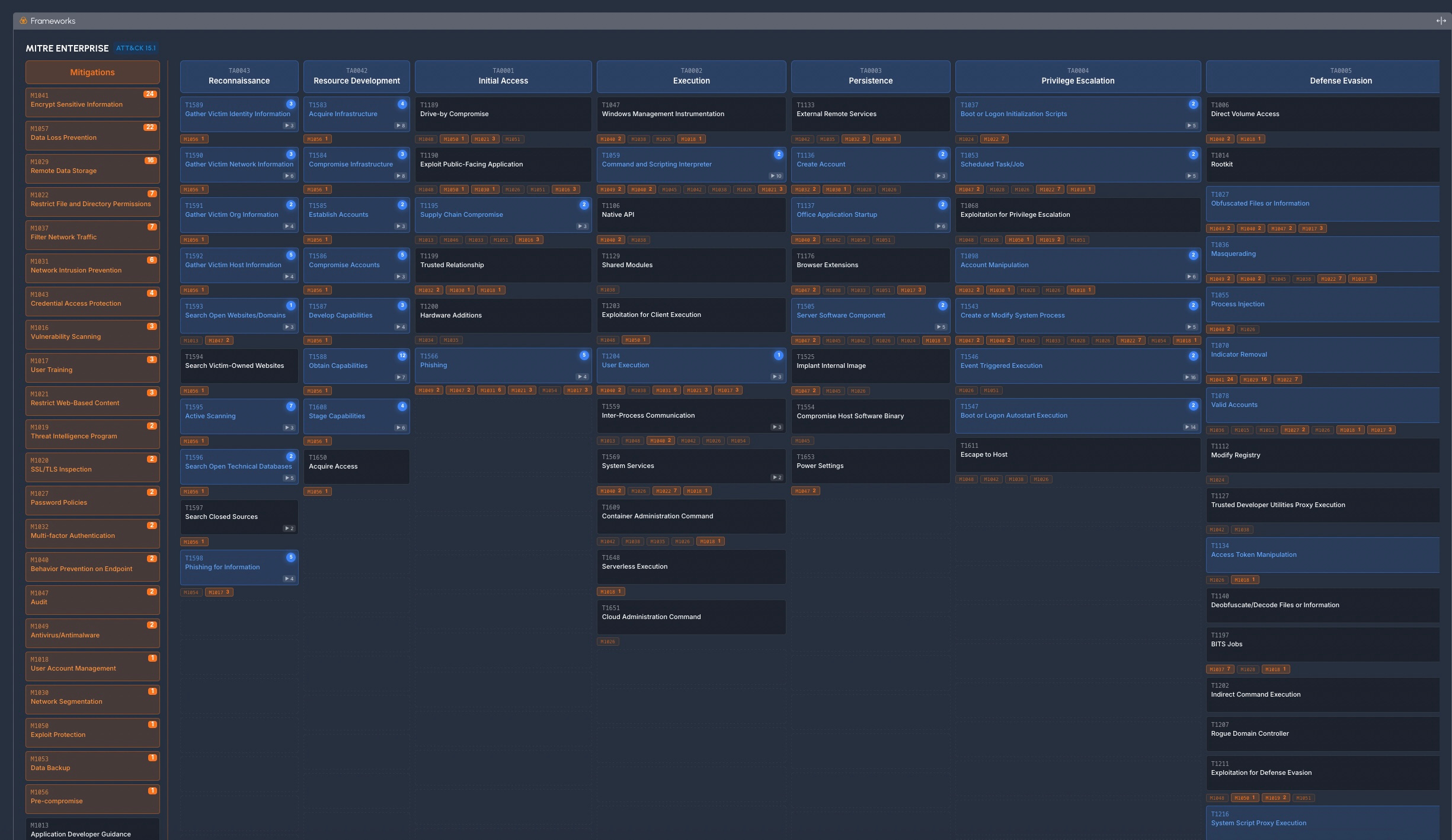
You can also look at MITRE ATT&CK coverage for all the products.
And finally, NIST CSF 2.0 mapping.
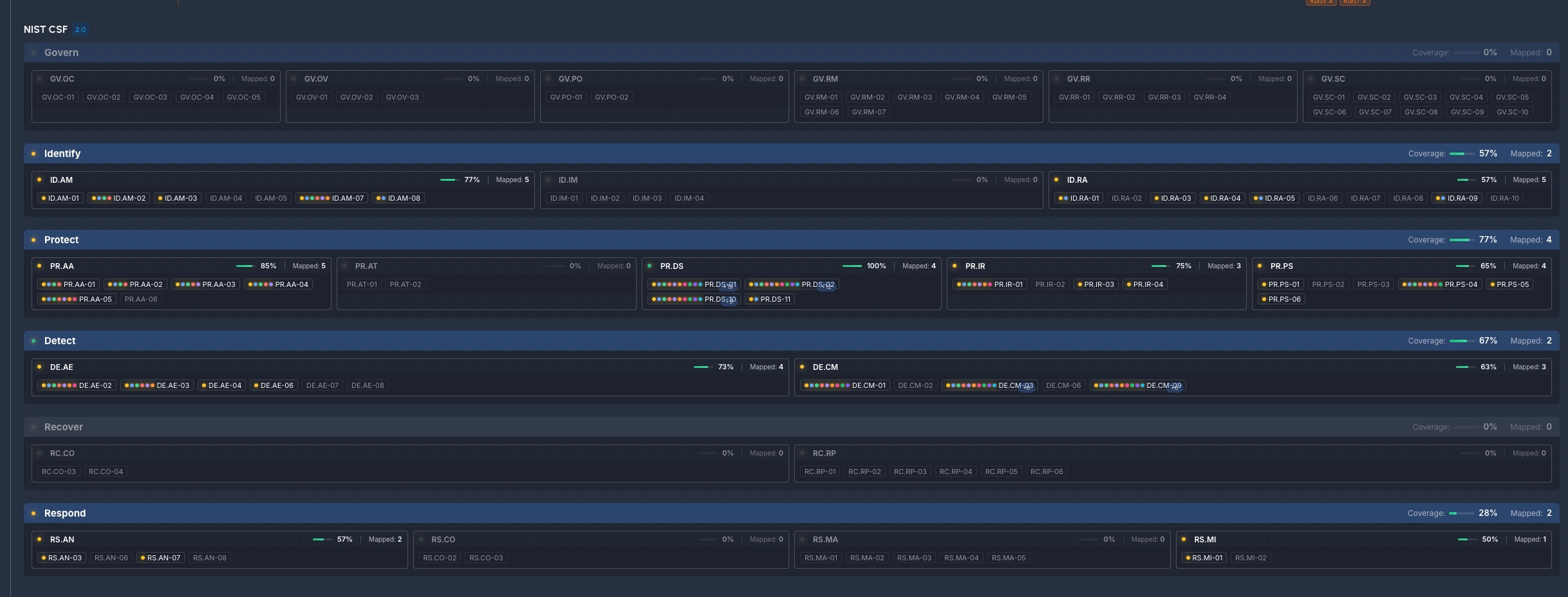
It’s pretty easy to glance at these images and see the primary focus of a reseller’s portfolio. This one is concentrated on Protect. Perhaps the company should be looking at more partners to broaden its coverage.
If you think about it. Resellers and MSPs are going to use the Stack Analysis Tool to help their customers make sense of their own Security Stacks. The reseller will identify gaps. Wouldn’t it make sense to have products in their portfolio to fill all those gaps as they are revealed?